The Kingdom has no border to cross and no queue to join. It has a threshold — and it is crossed by confession, not by qualification. This is citizenship in the older sense of the word: a standing, not a status any state issues.
The confession costs nothing and nothing about it is for sale. What costs money is the institution around it — the Register, the Chancery, the seats, the offices — borne by the citizens together at €111 a year: one published amount, the same from everyone.
— II
A community without borders
Three seats — Vienna, Washington D.C., Rome — and one body. No nationality is required, no residence, no prior confession. Where you live changes nothing about where you stand.
— III
A standing on record
Reception is entered in the Register of the Secretariat and attested by a Testimonium under seal, with an identity card the Chancery will verify for anyone you show it to. The Embassy’s offices — education, community, consultation and the rest — open to those it recognises.
On the word
Scripture calls this citizenship, and this page uses the word in that sense — the older one, and the exact one.
Politeuma: “our citizenship is in heaven” (Philippians 3:20). Sympolitai: “you are no longer
strangers and sojourners, but fellow citizens with the saints and members of the household of God”
(Ephesians 2:19). The word entered Christian use describing a standing held under a sovereign who is not
the local one — which is precisely what is described here, and why no smaller word fits it.
It is not the other sense. This citizenship is not a state citizenship and cannot be used in place of one. Section 05 draws that boundary in full, and it is the part of this page the Embassy would most like read.
Inter sacrum et civile · on naming things exactly
01What the Kingdom is
Before the path makes sense, the thing itself has to be clear — because almost everything written about it elsewhere describes something far smaller than it is.
The Kingdom of God is not a country, and the mistake usually made about it is to imagine it smaller than
it is rather than larger. Its extent is not some portion of the earth held apart from the rest: it is the whole
of the earth, and heaven with it. The earth is the Lord’s, and the fullness thereof (Psalm 24:1).
All authority in heaven and on earth has been given to me (Matthew 28:18). It draws no frontier — not
because it holds no ground, but because a frontier is what divides one territory from another, and there is
nothing outside this one to divide it from.
That totality is precisely why the Kingdom does not compete with any state for ground. A state holds title to a portion of the earth and governs what happens on it; the Kingdom’s claim is of another order — sovereignty over all things rather than title to a piece of them — and two claims of different orders do not contend for the same thing. This is the distinction underneath render to Caesar the things that are Caesar’s, and to God the things that are God’s (Matthew 22:21): not a carving-up of territory between claimants, but the recognition that the greater claim is not diminished by leaving the lesser one intact.
It is why entry has never been a matter of geography, ancestry or paperwork, and why no state has been able to grant it or withhold it. There is no border post at the edge of the Kingdom: wherever you are reading this, you are standing inside it already. What is asked is not that you travel to a place, but that you consent to the reign that covers the one you are in.
The Holy Church of Jesus Christ is the visible body of that reign: the assembly of those who have consented, gathered in one confession and served by one order of offices. The Embassy is what that body maintains at the threshold between the sacred order and the civil one — where the two can address each other without either pretending to be the other.
Citizenship of the Kingdom, then, is not admission to an organisation that happens to be religious. It is reception into the body — and the Embassy’s role is to keep the door, attest who has crossed, and serve those who have.
The Kingdom is entered the way a threshold is crossed: by turning, stepping, and staying — not by qualifying.
Inter sacrum et civile
02Who may come
The shortest section on this page, and the one most often disbelieved: anyone.
There is no condition of nationality — of any nationality, or of holding one at all — nor of residence, language, education, occupation, or standing in any other institution. No prior baptism is required, and no requirement to have belonged to a church before or to leave one you belong to now. Age is no bar; a minor comes with the consent of those responsible for them. A past is no bar — the premise of the confession is that it is made by people who have one.
Not required
A nationality of any kind, a second nationality, a residence permit, a certificate of good conduct, a sponsor, an introduction, or agreement with any political position. None of these is asked, and offering them changes nothing.
Required
The confession, made freely and in your own words as well as the received ones; and the intention to keep it. That is the whole of the condition, and it is not a formality — it is the substance.
On statelessness
A person who holds no nationality at all is a citizen of the Kingdom on exactly the same terms as anyone else.
It is worth saying outright, because it is the question asked most anxiously and answered worst elsewhere. The confession is what is asked, and no state was ever party to it. The Reception, the Register entry and the Testimonium are identical — an attestation of who you are and where you stand, from a body that needed no state’s permission to know either. Where someone has nothing else that says so, that is not a small thing.
Statelessness in the legal sense is a specific status with specific protections, and it is widely misdescribed. The Statelessness page sets out what it actually is under the 1954 Convention, how people fall into it, where a determination procedure exists — and what this Embassy does for stateless people, free and without any requirement to become a citizen.
The one worldly thing that is asked is money, and it is asked after the door rather than at it: the annual contribution is €111, set out in full in section 04, and it sustains the Register and the offices rather than purchasing anything. Nothing is asked of you for enquiring, for confessing, or for being heard.
If you are wondering whether some circumstance in your life disqualifies you, the answer is almost certainly no, and the Secretariat would rather be asked than have someone turn away on a guess.
03The path
Four steps. The first is yours alone; the last is a record of it. Nothing is charged until the third, and none of them is hurried.
1
The Confession
That Jesus Christ is Lord, and that God raised him from the dead. Made freely, in your own words alongside the received ones. Nothing precedes it and nothing substitutes for it.
2
The Petition
A letter to the Office of the Secretariat asking to be received. Your name, where you are, and — in whatever words you have — why. No form, no template, no length requirement.
3
The Reception
A conversation with an officer of the Church — at one of the three seats, wherever you are, or by video call. Where baptism has not been received and is desired, it is given here. Nothing is examined; everything is heard.
4
The Record
Entry in the Register of the Secretariat under a permanent reference, and the Testimonium issued under seal. From this point the Embassy recognises you, and its offices are open.
Standing begins with the confession, not with the certificate. The record attests what already happened; it does not create it.
DurationWeeks rather than months, and shorter where the petitioner is near a seat. The Reception is scheduled to suit the petitioner, not the Secretariat; nothing lapses if it takes longer.
In person or remoteAt Vienna, Washington D.C. or Rome, at a Mission, or by video call — whichever suits you. A conversation held over a screen is not a lesser form of it: most are received that way, and nothing about the reception, the Register entry or the Testimonium differs. The Secretariat sends a link that opens in a browser, and a voice call does just as well.
DocumentsReception itself asks only for a name the Church can record and a means of writing to you; no identity papers are needed to be received. Identity is verified at the point the Testimonium is issued — that verification is what makes it a credential a third party can rely on, rather than a certificate anyone could have asked for.
Cost€111 a year, falling due at the Reception and annually after it, the same from everyone and covering everything on this page. Nothing at all is charged before the Reception, or for writing, asking or being heard. Terms in full in section 04.
LanguageThe Reception is held in the petitioner's language wherever the Church can provide it, and through an interpreter of the petitioner's choosing where it cannot.
WithdrawalCitizenship of the Kingdom may be renounced at any time by a letter to the Secretariat, and the Register is amended accordingly. Nothing is retained against anyone who leaves and no reason need be given. Because the Kingdom’s citizenship touches no nationality, renouncing it leaves your civil status exactly as it was.
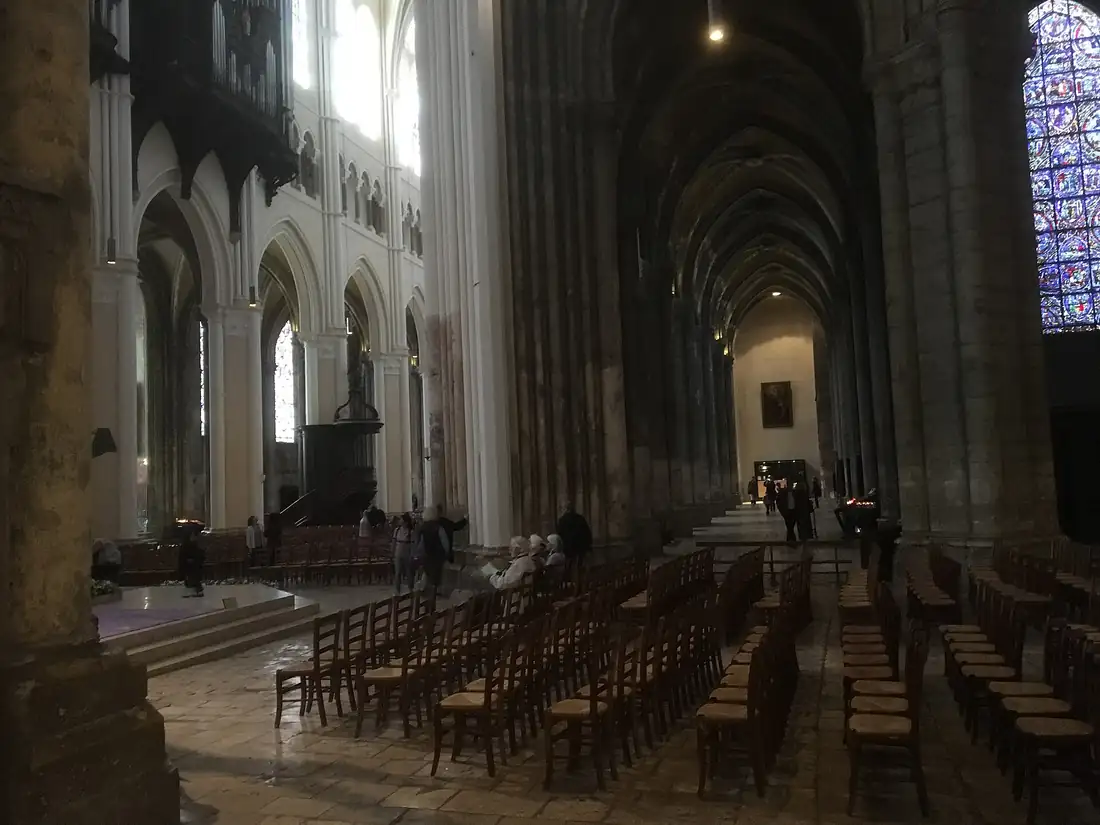
The threshold is at the west door — the whole length of the nave lies on the other side
04What you receive, and what it costs
Three things arrive. Two of them are documents and state what you are; the third states
nothing at all, which is rather the point of it. One amount covers all three and everything behind
them, and it is published here rather than quoted on request.
I · The Testimonium
The certificate of citizenship
The formal instrument: your name, the date of your Reception, the seat that received you and the permanent Register reference, under the seal of the Secretariat. This is what the Chancery attests when a third party asks it to. Issued once, replaced without charge if lost, and printed to be kept rather than filed.
SealedRegister referenceAttestable
II · The Card
An identity card
Pocket-sized, carrying your name, your Register reference and a verification code anyone you show it to can check against the Chancery. It is for the ordinary occasions where someone needs to know who you are and what your standing is — a Mission, an office of the Embassy, a chaplaincy. It is not a civil identity document and does not stand in for one; section 05 draws that line.
VerifiableCard formatNot a civil ID
Box chain · square links
III · The Cross
A gold cross, worn
The only one of the three that is not administrative. A small cross in 18-karat gold-fill on a chain of your choosing, given at the Reception. It records nothing, proves nothing and is checked by nobody — it is the sign of the thing, worn by the person it happened to. For most citizens it is the part still on them long after the certificate went into a drawer.
Square links set flush against one another —
the denser of the two, and the one that sits flattest at the collar.
18K gold-filledReal gold, bonded — not platedPendant 6.7 × 11.8 mmChain 16–19 in, adjustableTarnish-resistant
On the metal · said exactlyThe cross is 18-karat gold bonded to a brass core. That is real gold, and it is
not solid gold — and the Embassy would rather you knew than were impressed.The difference between bonded and plated, and why not solid
Gold-filled is not gold plating, though the two are spoken of as though they were.
Plating is a wash applied electrically, under a micron thick, which wears through at the edges within a
year or two of daily wear. Gold-filled is a sheet of karat gold bonded to the core under heat and
pressure, and the standard that permits the name requires the gold to be at least a twentieth of the
item’s total weight — tens of microns, on the order of a hundred times a plating. It does not
flake and does not wear through in ordinary use. What touches your skin is gold.
Gold-platedUnder 1 micronAn electrical wash. Wears through at the edges. Not what the cross is.
Gold-filled · this crossTens of microns18-karat gold bonded under heat and pressure to a brass core, at least 1/20 of total weight in
gold. Made for daily wear.
Solid goldGold throughoutKarat gold all the way through, and hallmarkable. The cross is not this.
Why not solid gold, stated rather than skirted. A solid 18-karat cross and chain would
cost several times the annual contribution in metal alone. An institution that told you otherwise would
be telling you its first small lie, and this page has asked you to believe several larger things. It
carries no hallmark, because a hallmark attests solid content and this is not that.
The contribution
€111a year, the same from everyone
It falls due at your Reception and annually on that date, and it covers the whole of
what is described above — the Register entry, the Testimonium, the identity card, the cross, and the
offices of the Embassy for the year.
DueAt your Reception, and on that date each year after. Nothing is
asked before the Reception, and nothing is asked of you for enquiring.
CoversThe Register entry, all three items above, the Chancery’s
attestations, and the seven offices for the year. There is nothing further to buy.
The same for everyoneThere is no reduced rate and no premium one, no
tier and no upgrade. Nobody’s standing, service or record differs by what they paid.
If it goes unpaidThe Register entry lapses and the offices close to
you. Writing to the Secretariat restores it on resuming the contribution; nothing is charged for the
period that lapsed.
CancellingAt any time, from the link on your receipt or by a letter to
the Secretariat, with no reason required. It takes effect at the end of the year already paid.
WithdrawalFourteen days from your first payment, for any reason or
none, with the full amount returned. Write to the Secretariat and it is done.
What lapses, and what cannot
What lapses is the Register entry — not the confession, and not your standing before God. Section 01 said no authority on earth can grant this citizenship or withhold it, and that is as true of this office as of any state: what the Embassy keeps is a record, and a record has staff, seats and costs. Nobody is un-confessed by an unpaid invoice, and the door is not bolted behind anyone. Write, and the entry is restored.
Arrangements are made with the Office of the Secretariat after your
Reception. No payment is taken on this page and no card details are ever requested by email.
None of the three is priced separately and there is no better
set for anyone who gives more — what arrives is what every citizen receives.
05What this citizenship means — and what it does not
The second half of this section matters more than the first, and it matters more since the word on this page became citizenship. An institution that lets people misunderstand what it grants is not serving them, and this one would rather be believed than believed in.
It grants
Standing before the Church
Recognition as a citizen of the Kingdom and a member of the body, pastoral care, the sacraments as the Church administers them, and the right to be heard by the Office of the Secretariat.
It grants
Access to the offices
Education, Community Development, Start-Up Support, International Exchange, Consultation, Finance, and IT & AI Implementation — the seven services, open to those the Embassy recognises.
It grants
A verified identity credential
The Testimonium and the identity card that goes with it, issued under seal against verified identity and carrying a permanent Register reference anyone can check with the Chancery — which will also attest your standing to a third party directly, on your request.
It does not grant
A nationality
Citizenship of the Kingdom is not citizenship of any state and confers none. It does not create,
replace, restore or end any nationality you hold, does not shorten a naturalisation, and does not support
a claim to asylum. No state is obliged to give it any effect, and none does.
It requires none either — a person holding no nationality at all is received on precisely the same terms, as section 02 sets out.
It does not grant
A right of entry at a border
Admission to a country is granted by that country and by nothing else. The Testimonium identifies you and attests your standing wherever identity and standing are what is asked — but it is not a passport, not a visa, not a residence title, and obliges no state to let you in or let you stay. Carry it alongside your national documents, never in place of them.
It does not grant
Relief from civil obligation
Taxes, military or civil service, court jurisdiction, contracts and debts follow the law of the place you live and the state whose nationality you hold. This citizenship touches none of them. Any claim that it exempts you from a civil duty is false wherever it comes from, and the Church has never made it.
A warning, plainly
There is a trade in invented citizenships, and the people it takes money from are usually the ones least
able to lose it.
Sovereign passports, world-citizen papers, “diplomatic” credentials, church identity cards sold with the promise that a frontier will honour them. They are marketed to people who want out of something, they cost real money, and at a border they produce the exact opposite of what was promised. Several of the schemes now in circulation invoke the Kingdom of God by name.
The tell is not that money is involved — nearly every institution costs something to run, and this one publishes what it costs. The tell is what the money is said to buy. A payment said to produce a nationality, a passport, a residence right or an exemption from a civil duty is a fraud, whoever is taking it.
This Church asks one published amount for the upkeep of the institution and sells no status, no document of civil effect, and no exemption from anything. If anyone invokes the Kingdom of God, this Embassy or this Church while offering you papers, a status, a nationality or an exemption in exchange for money, they are not acting for it — and the Office of the Secretariat asks to be told, at inquiries@kgd-embassy.org.
None of the above waits on a government. The Kingdom seeks recognition from no state and would be no different for having it — the declaration at the foot of this page sets out why.
What the Kingdom gives is not a better set of papers. It is the one standing that no authority on earth issued and none can revoke — which is exactly why it does not pretend to do the work of the ones that did.
06What is asked of you
Little, and all of it plain. None of it is a condition of reception; all of it is what reception means in practice.
The confession keptNot perfectly — nobody manages that, and the Church has never claimed otherwise. Kept in the sense of returned to: the confession is a direction, and what is asked is that you keep facing it.
ConductThat your dealings with others — inside the body and outside it — do not contradict what you have confessed. The Church does not police this. It does ask that you take it seriously, because it is the only part of the confession anyone else can see.
The contribution€111 a year, which sustains the Register and the offices and is the one thing on this list with a figure attached to it. Beyond it, giving is entirely free: no further amount is set, none is expected, and nothing — standing, service, sacrament or the hearing you are given — differs by what anyone gives. See section 04.
PresenceSuch as your life allows. The Kingdom’s citizens are scattered across countries and time zones; the Church assumes distance rather than proximity and is built for it.
Honesty with the SecretariatThat the Register holds a true name and a working address. It is the only administrative duty this citizenship carries.
On what cannot be asked
No one is asked to surrender property, sever family ties, cut off other affiliations, or place any person of this Church between themselves and God.
Any demand of that kind, from anyone claiming to act for this Church, is a demand it has not authorised — and the Office of the Secretariat asks to be told of it.
07Beginning
If you have read this far and the confession is one you can make, there is no further preparation to do. The next step is a letter.
Write to the Office of the Secretariat. Say your name, where you are, and whatever you wish about why. It need not be eloquent or long — a paragraph is enough, and none has been turned away for its prose. An officer of the Church will answer, and the Reception is arranged around you: at a seat, at a Mission, or by video call at an hour that suits your time zone.
If you are not yet at the confession but want to talk about it, write anyway and say so. That letter is answered the same way, by the same people, with no less care.
The Office of the Secretariat receives petitions at all three seats under identical procedure. No credential, payment detail or identity document is ever requested by email.
On sovereignty and recognition
The Kingdom is sovereign, and seeks the recognition of no state. Sovereignty is what
it has; recognition is only what states do about one another.
The Kingdom of God is sovereign in the fullest sense the word carries. Its authority
is underived — held from nothing, answerable to nothing above it, older than every jurisdiction now in
existence. All authority in heaven and on earth has been given to me (Matthew 28:18). No state
conferred it, none sustains it, and none can diminish or revoke it. It does not become true upon
acknowledgement, nor false upon denial.
It is not the sovereignty of a state, and the Kingdom does not claim to be one: no statehood declared,
no territory held to the exclusion of any government, no border disputed. Recognition is how states
acknowledge one another’s title to a portion of the earth — and the Kingdom claims no portion,
its extent being the whole.
No state has recognised it, none is asked to, and were one to extend recognition tomorrow or
announce its withdrawal, nothing here would move — not the extent, not the confession, not the
Register, not one office of this house, not the standing of a single person within it.
Said of us, it is said wrongly. The Kingdom’s legates carry its commission and its
authority; they do not carry a state’s privileges and have no need of them. Nobody is authorised to
claim, in our name, a diplomatic status, immunity, accreditation or official standing conferred by any
government — nor to claim the withdrawal of what was never sought. Those a receiving state grants, one
person at a time and by its own consent; this Kingdom has asked for none. Any such claim is not ours:
tell the Secretariat.